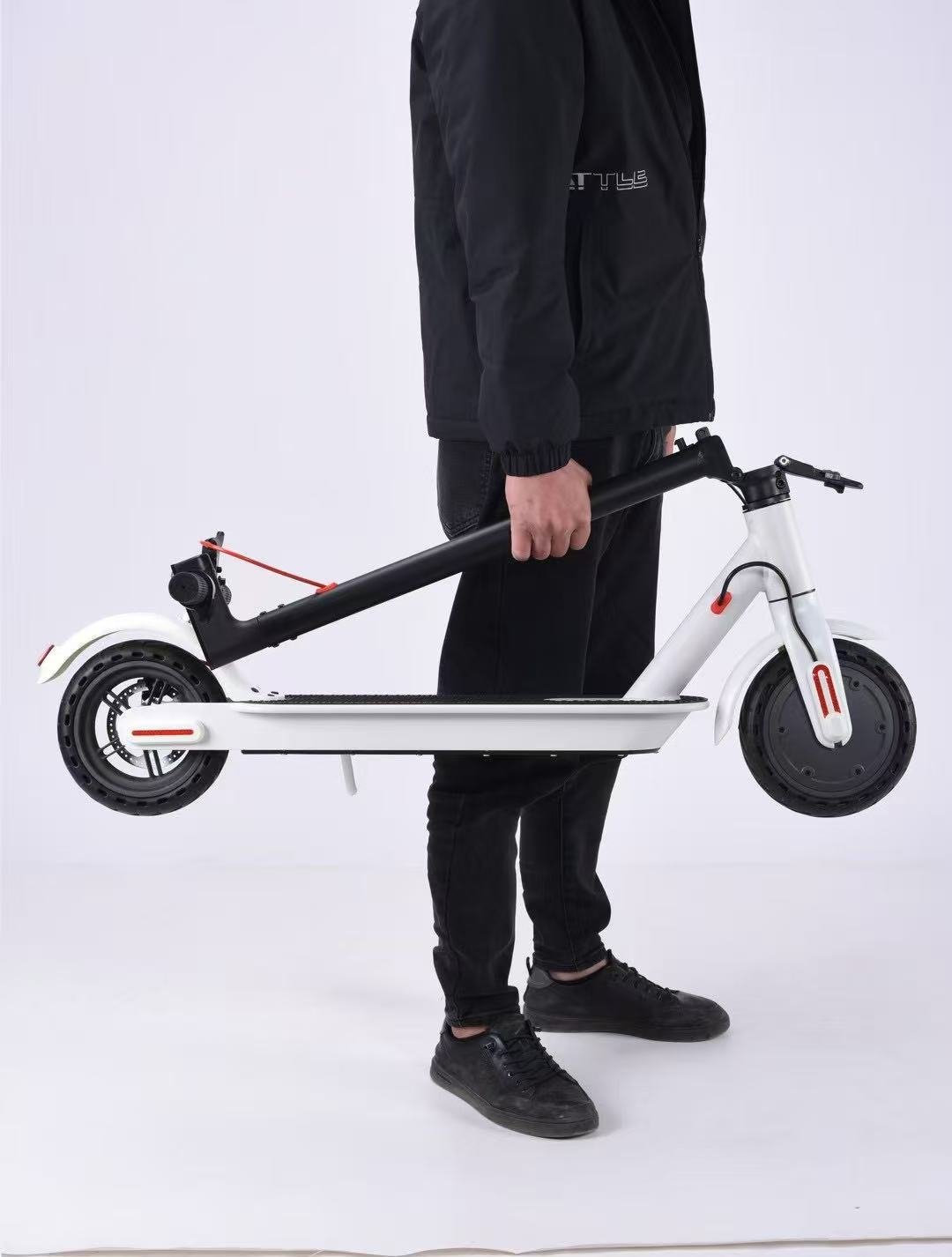
A useful folding electric scooter balances range, portability, control, local rules and after-sales support. Start with your normal route, storage constraints and destination requirements, then compare models with a realistic margin.
Start with distance, then add reserve
Measure a typical round trip and add reserve for cold weather, hills and battery ageing. Published maximum range depends on controlled conditions. Frequent riders should not plan to arrive with an empty battery.
Treat portability as a complete system
Weight is only one factor. Consider folded dimensions, the locking mechanism, where you will lift it, and whether your building or transport operator permits lithium-battery vehicles. A compact fold matters most when it matches the real transfer points in your day.
Tyres and braking shape everyday confidence
Road-sized pneumatic tyres can reduce harshness and preserve grip, but pressure and tread still need regular inspection. Brakes must feel progressive and predictable. Before every ride, check both brakes, lighting, tyres, the stem and the folding latch.
Check the destination edition and local rules
Electric scooter rules differ by country, state, city and transport operator. Speed, motor output, age, helmet and public-road access may all be regulated. Select the correct EU or US edition and verify the rules where you will actually ride.
Compare ownership, not only purchase price
Look beyond the headline price. Review delivery, charger compatibility, spare-part access, warranty scope, return conditions and support contact. A clear seller should explain what is included and avoid universal range or road-legality claims.
This guide is general product information, not legal advice. Verify current local rules before riding.